
THE COMPLETE GUIDE · UPDATED NOVEMBER 2026
Architectural Film Guide NZ: Uses, Cost, Lifespan & Rules
Everything you need to know before wrapping counters, cabinetry, doors, lifts or frames in New Zealand, from an Auckland team that designs, makes and installs interior surfaces and signage.
Free to ask · no obligation
Send a photo, get a quote
Tell us what you need and one way to reach you. Photos help, but you can send them later.
- 5.0 · 20 Google reviews
- We reply within 1 business day
- Auckland sign makers since 2012
- Designed, made & installed in Auckland
What is architectural film?
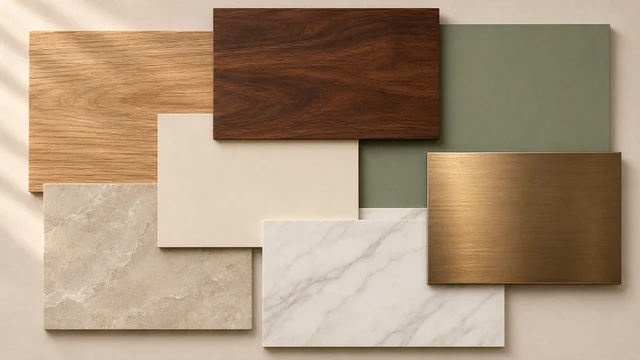
Architectural film is a thick, self-adhesive decorative film, usually PVC or polyolefin, that is printed and embossed to look and feel like timber, stone, marble, concrete, metal, leather or fabric, or produced in solid colours. It is made for interior surfaces such as cabinetry, counters, doors, walls, columns and lifts. Some products are rated for exterior use on suitable items like aluminium window frames. It is applied directly to the existing surface, on site, by a trained installer.
People call it many things: architectural vinyl, architectural wrap, interior film, surface film, decorative film, joinery wrap, kitchen wrap or simply vinyl wrapping. Well-known ranges include 3M™ DI-NOC™ and Cover Styl, along with other premium interior film ranges.
How architectural wrapping works
- Assess. The installer checks the substrate, existing coating, edges and how the surface is used. Not every surface is suitable.
- Prepare. Surfaces are cleaned and degreased, chips filled and sanded, and a primer applied where the film system needs it. Handles and hardware are removed.
- Apply. The film is cut, applied with air-release adhesive, heated to wrap around edges and profiles, and trimmed. Grain direction and seams are planned before cutting.
- Finish. Edges are sealed and post-heated where required, hardware is refitted and care guidance is handed over.
Because it is a dry, quiet trade with no demolition, most commercial spaces can keep operating around the work.
Where architectural film is used
Almost anywhere sound joinery looks dated: hotel and motel rooms, offices, reception desks and counters, restaurants, cafés and bars, retail fit-outs, medical and dental clinics, apartment lobbies and lifts, gyms and salons, kitchens, vanities and laundries, interior doors, lifts, columns and wall panels, furniture and wardrobes and aluminium window frames.
Where it should not be used
- Surfaces that are loose, swollen, rotten or structurally failing. Repair or replace first.
- Floors and stair treads (dedicated floor graphics are a different product).
- Areas of standing water, shower walls and anywhere a waterproof membrane is required.
- Directly beside ovens, hobs, fryers or other high heat, unless the specific product allows it.
- Fire-rated or smoke-control doors and escape-route linings without approval for the complete assembly.
- Food-preparation worktops and clinical work surfaces, unless the exact product and use are approved.
- Outdoor surfaces with an interior-only film.
How long does architectural film last?
On sound, well-prepared interior surfaces, quality architectural films are made for long service. Manufacturers publish durability guidance for each product, and on interior surfaces it commonly runs to many years when the film is installed and cared for correctly. Real-world life depends on preparation, the substrate, wear, cleaning products and sunlight. Exterior films have their own, usually shorter, outdoor guidance. Ask for the exact product data sheet with your quote, and any warranty conditions in writing.
How much does architectural wrapping cost in NZ?
Projects are priced on the surfaces, not a flat rate, because a small detailed job can take longer than a large flat one. The main cost drivers are:
- Coverage: the number and size of doors, panels, counters and frames.
- Preparation: filling, sanding, priming and repairs.
- Complexity: routed profiles, curves, edges, handles and corners.
- Film choice: premium ranges and textured or metallic finishes cost more per metre than standard solid colours.
- Access and staging: after-hours work, occupied rooms, lifts and height.
- Removal and refitting of hardware and fittings.
For homes, see the kitchen wrapping cost guide. For commercial projects, send photos and a surface list and we will quote it properly.
Wrap, paint, respray or replace?
| Architectural wrap | Paint / respray | Replace | |
|---|---|---|---|
| Best for | Sound surfaces that need a new look | Sound surfaces where a coating suits | Failed joinery or a layout that must change |
| Finishes | Timber, stone, marble, metal, fabric, colours, with real texture | Colours and sheens | Anything, at full cost |
| Disruption | Low: dry, quiet, on site | Medium: prep, fumes, curing, often off site | High: demolition, new joinery, several trades |
| Waste | Minimal; joinery stays in use | Low | High; old joinery to landfill |
| Watch out for | Heat, water, fire-rated items, poor substrates | Coating adhesion on laminate, chipping | Cost and downtime |
Fire safety and compliance in New Zealand
The New Zealand Building Code sets fire-performance requirements for internal surface linings, which are stricter in escape routes and some building types. If film is proposed for corridors, stairwells, lobbies or other egress routes, the product must have current fire-test evidence for the classification required, on the relevant substrate. Fire-rated and smoke-control doors are certified as complete assemblies, so they are not wrapped without approval. A responsible installer raises this before quoting, not after.
Caring for wrapped surfaces
Clean with a soft cloth and a mild, non-abrasive cleaner unless the product guidance says otherwise. Avoid scourers, solvents and steam cleaners unless the film allows them. In hotels, clinics and gyms, check your housekeeping chemicals against the film’s chemical-resistance guidance before approval. Small areas of damage can often be patched with the same film code, which is why recording the approved codes matters.
How to choose an architectural wrapping installer
- Do they assess the surface honestly, and tell you when something should be repaired or replaced?
- Will they show physical samples and name the exact film codes in the quote?
- Do they understand fire-rated doors, lifts and escape routes, and raise them early?
- Can they stage work around your trading hours, guests or residents?
- Is the written quote clear about preparation, exclusions, access and warranty?
- Can they handle your signage too, so the space is finished as one project?
That is how our sister brand VERRANO works. Verrano is a certified installer of 3M™ DI-NOC™ and Cover Styl architectural films, can show both full ranges in person, and works alongside SignSpot, which has designed, made and installed signage for Auckland businesses since 2012. Visit verrano.nz.
FREE 30-SECOND CHECK
Wrap, repair or replace? Check your surface
Answer four quick questions for an honest first opinion on whether architectural wrapping suits your surfaces. Nothing is sent until you choose to request a quote.
FREE DOWNLOAD · PDF
Commercial wrapping project checklist
The one-page planning checklist we use for hotels, offices, retail and body corporate projects: surfaces, condition, fire and lift approvals, cleaning products, access and staging, finish approval and what to send for an accurate quote. Print it, walk your site and send it back with your photos.
Architectural film FAQs
Is architectural film the same as vinyl wrap?
It is a type of vinyl (or polyolefin) wrap, but much thicker and designed for architectural surfaces, with realistic textures and specialist adhesives. Vehicle wrap film is a different product.
Can you wrap over laminate or melamine?
Usually yes, if it is firmly bonded, clean and prepared with the right primer for the film system. Peeling or swollen laminate must be fixed first.
Can architectural film be removed?
Yes, it can be removed, but removal can damage paint or weak surfaces underneath. Assume removal needs care, and discuss it if you need the original surface preserved.
Does it look real?
Premium films are embossed with real texture, so timber grain and stone can be felt as well as seen. Viewing a physical sample in your own lighting is the best test.
Can you wrap a whole hotel floor?
Yes. Large projects are usually staged room by room or floor by floor, starting with an approved sample room.
Is architectural wrapping sustainable?
It keeps sound joinery in use instead of sending it to landfill, and some films contain recycled content or are non-PVC. Ask about the specific product if this matters for your project.
How long does installation take?
It depends on coverage, preparation and access. A reception desk may take a day; a hotel floor is staged over an agreed programme. We give you a programme with the quote.
Do you work outside Auckland?
Our team is based in East Tāmaki and covers all of Auckland. Larger commercial projects elsewhere in the upper North Island can be discussed.
PHOTOS FIRST. A CONSIDERED QUOTE NEXT.
Planning an architectural wrapping project?
Send photos, rough sizes and your Auckland location. We reply within 1 business day.
Send a photo, get a quote
Photos help, but you can send them later. Tell us what you need and one way to reach you.
We reply within 1 business day Monday–Friday, 9am–6pm Credentials held by members of our installation team: NZSDA · Site Safe · Avery Dennison Certified Wrap Installer · 3M Certified Installation Company.