
Clear design hierarchy
Prioritise the information people need first and remove detail that cannot be read at the intended distance.
Partial and full-colour vehicle wraps for Auckland business cars and promotional vehicles.
SignSpot provides design support, production, supply and Auckland installation, with a clear artwork proof before the approved sign is made.
Free to ask · no obligation
Tell us what you need and one way to reach you. Photos help, but you can send them later.
Common options and applications include full wraps, partial wraps, colour-change brand sections, printed panels and coordinated vehicle lettering. The final specification should reflect where the sign will be seen, who needs to understand it and how frequently the information may change.
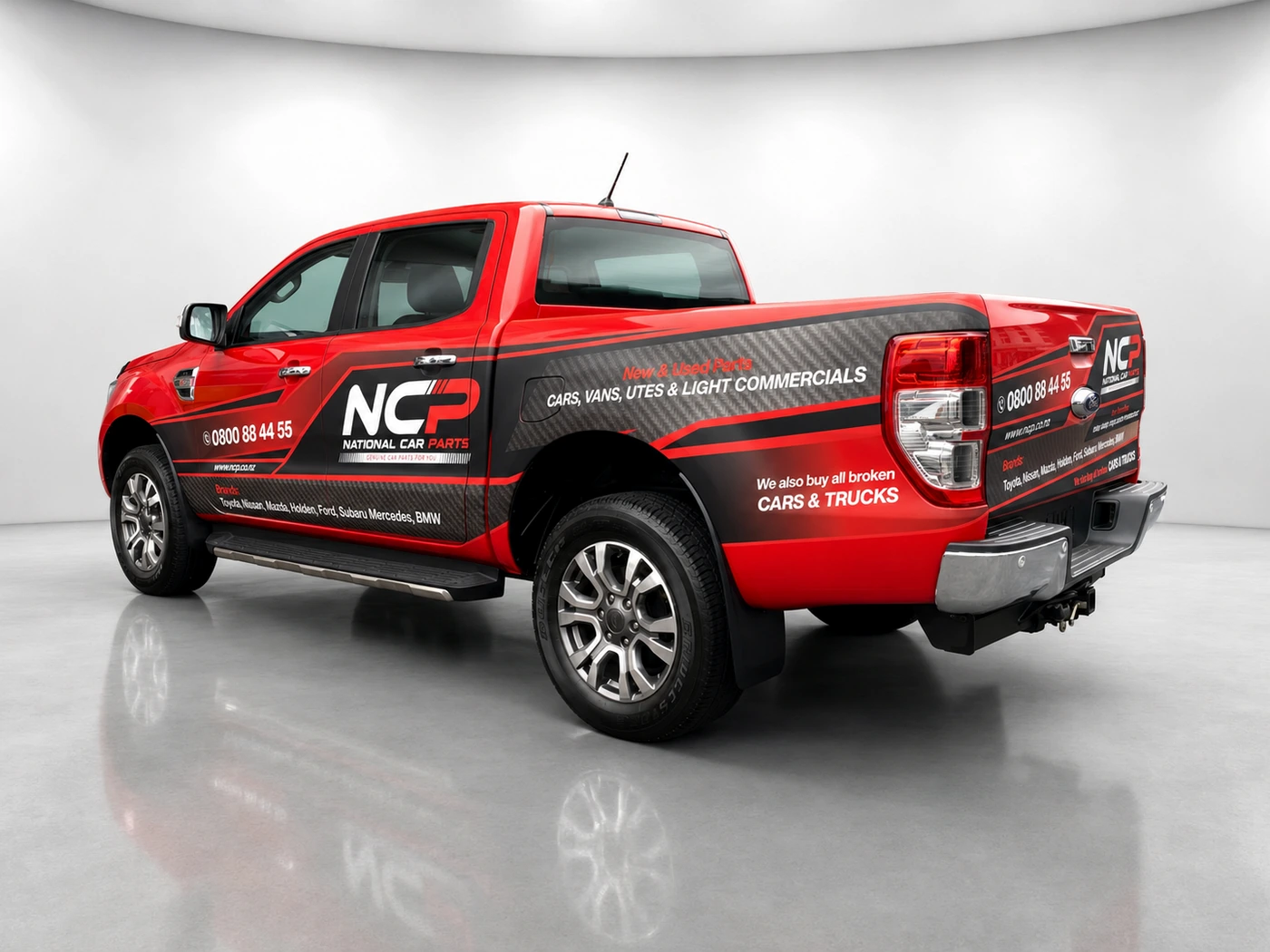
Plan around body lines, sensors, handles and panel joins. The design must still read when viewed quickly in traffic.
Prioritise the information people need first and remove detail that cannot be read at the intended distance.
Match the substrate, print, laminate, finish and fixings to the surface and expected life.
Plan access, preparation and alignment so the finished sign looks intentional and performs reliably.
Share photographs, measurements, wording, logo files and timing.
Confirm layout, scale, colours, materials and any installation notes.
The approved sign is printed, cut or fabricated for the agreed application.
Collect the finished work or arrange professional Auckland installation.
Size, material, artwork, quantity, finishing, access and installation all influence the quote.
Yes. Provide your logo, wording, photographs and any existing brand guidance for an artwork concept and proof.
SignSpot recommends materials after considering the surface, environment, expected life, viewing distance and budget.
Send what you know. Photos and rough measurements are enough to start a useful conversation.
Request a QuotePhotos help, but you can send them later. Tell us what you need and one way to reach you.
We reply within 1 business day Monday–Friday, 9am–6pm Credentials held by members of our installation team: NZSDA · Site Safe · Avery Dennison Certified Wrap Installer · 3M Certified Installation Company.
Car signage covers a range of treatments. At the simple end, cut-vinyl lettering and a door logo identify the business on its existing paint. Partial wraps add colour fields and graphics to selected panels, and a full wrap changes the look of the whole car. Many Auckland businesses start with lettering on one car and move to fuller car graphics as the fleet grows. Tell us which you are leaning towards, or ask us to compare two options on your actual model.
Useful car signage usually answers three questions for a passer-by: who you are, what you do and how to reach you. Rear-window graphics, side door panels and the bonnet each suit different messages. If the car is also used privately, say so, because that can change how much coverage makes sense. Our vehicle lettering, van signage and fleet branding services cover the related options.
A car wrap is one way to apply a business identity to a vehicle; it is not automatically the right specification for every enquiry. Begin with the purpose. Do you want a strong branded colour field, selected photographic graphics, a recognisable logo arrangement or relatively restrained identification? Explain what needs to be seen first and how the car is used. A design can then be assessed against the actual body rather than a generic outline.
Full and partial coverage need a clear written scope. Ask which panels, edges and details are included, and which parts of the original vehicle finish remain visible. A quotation should distinguish graphic design, production, preparation, removal of existing material and installation where relevant. Do not assume that the word “wrap” describes the same package in every proposal.
Send clear side, front and rear photographs, along with the make, model and year. Include close views of existing graphics, damaged areas, repainting, trims or modifications that may affect the work. The condition of the surface matters; an image alone cannot establish that every panel is suitable. Any necessary inspection, preparation or exclusion should be discussed before production.
Door handles, body seams, recesses and glazing can interrupt a layout. A graphic that looks balanced on a flat rectangle may lose its most important wording on the car. Design review should therefore consider the real vehicle and the position of each message, including what is visible when doors are closed and when the vehicle is parked.
A partial design can use the existing body colour as part of the composition. This may suit a brief where the logo, selected colour areas and contact information are the priority. Fuller coverage gives the designer a different canvas, but it also changes the production and application scope. Compare proposals by their included surfaces and design purpose rather than treating greater coverage as an automatic improvement.
The Redmint Media project shows a red-and-black identity arranged across a white SUV. Its selected graphic coverage follows the body shape and keeps supporting details in their own areas. That is a documented design example, not evidence that the same layout or material specification will suit another model.
Start with the business name and the clearest description of its service. Decide whether a phone number, website or another contact route deserves priority. Long lists of capabilities can compete with the identity, especially where a viewer has little time to read. Check the side and rear as different surfaces rather than expecting one layout to do both jobs.
Use suitable logo files and original photography where the design needs them. A small image copied from social media may not contain enough detail for a large printed area. If files are incomplete, tell us before the artwork is finalised so any preparation or design work can be included in the scope.
Material selection follows the vehicle surface, graphic construction and intended application. Discuss the proposed vinyl, print and laminate system for the actual job. Do not infer a particular film series, warranty or service life from a photograph of another client’s vehicle. Any product-specific terms should be confirmed in the agreed specification.
Provide a realistic availability window for the car and state whether old graphics need removal. Timing depends on scope, approvals, preparation and production scheduling. If the car must remain in use, explain that constraint early. Installation arrangements should be agreed rather than assumed to be possible in any driveway or parking space.
Check spelling, contact details, logo proportions and the included panels. Compare the proof with current photographs of the car, particularly if it has been repaired or modified since the initial enquiry. Ask about any unclear boundary between printed coverage and exposed paint. Approving a layout is also the opportunity to confirm what is excluded.
For businesses adding more vehicles later, retain the approved artwork and identity files. The same visual system can be adapted to another model without stretching the first design. A fleet should look related, but differences in body shape, glazing and usable panel size still need individual attention.
Follow the cleaning and care guidance supplied for the installed materials. If a panel is damaged or business information changes, send photographs and describe the issue before arranging replacement. Removal is a separate consideration and should be assessed against the condition and history of the vehicle; do not assume that every existing surface will respond in the same way.
To start, send the vehicle details, photographs, logo, required wording and a description of the coverage you have in mind. If you are unsure whether lettering, a partial design or a fuller wrap is appropriate, say so. SignSpot can discuss the options and prepare a scope based on the actual vehicle and your priorities.
SignSpot coordinates design and installation across Auckland. Start with the page for your area, then send the site or vehicle details for a scoped quote.