
Clear design hierarchy
Prioritise the information people need first and remove detail that cannot be read at the intended distance.
Clean, cost-effective vinyl lettering for cars, vans, utes, trucks and work fleets.
SignSpot provides design support, production, supply and Auckland installation, with a clear artwork proof before the approved sign is made.
Free to ask · no obligation
Tell us what you need and one way to reach you. Photos help, but you can send them later.
Common options and applications include business names, phone numbers, websites, service descriptions, unit numbers and compliance details. The final specification should reflect where the sign will be seen, who needs to understand it and how frequently the information may change.
Limit the roadside message to what can be understood in a few seconds. Use contrast and generous letter spacing.
Prioritise the information people need first and remove detail that cannot be read at the intended distance.
Match the substrate, print, laminate, finish and fixings to the surface and expected life.
Plan access, preparation and alignment so the finished sign looks intentional and performs reliably.
Share photographs, measurements, wording, logo files and timing.
Confirm layout, scale, colours, materials and any installation notes.
The approved sign is printed, cut or fabricated for the agreed application.
Collect the finished work or arrange professional Auckland installation.
Size, material, artwork, quantity, finishing, access and installation all influence the quote.
Yes. Provide your logo, wording, photographs and any existing brand guidance for an artwork concept and proof.
SignSpot recommends materials after considering the surface, environment, expected life, viewing distance and budget.
Send what you know. Photos and rough measurements are enough to start a useful conversation.
Request a QuotePhotos help, but you can send them later. Tell us what you need and one way to reach you.
We reply within 1 business day Monday–Friday, 9am–6pm Credentials held by members of our installation team: NZSDA · Site Safe · Avery Dennison Certified Wrap Installer · 3M Certified Installation Company.
Vehicle lettering focuses on a clear identity and useful information without necessarily covering large areas of the body. It may include cut lettering, logos and selected printed elements, depending on the design. The original paint becomes part of the composition, so contrast and placement matter. Start with what a customer needs to recognise, rather than how many words can fit on a door.
This approach can suit a restrained business presentation or a brief that prioritises specific information. It is not a universal substitute for a wrap. The artwork, vehicle colour, available space and desired effect determine the scope. Compare the options with a current photograph of the actual vehicle, not only a generic example.
Give the company name a clear role, then organise the main service description and contact information around it. A small mark, a long list of services and several contact methods can all compete for attention. Decide what matters most before deciding the size of each element. The rear of a vehicle may need a different arrangement from the side.
Check whether lettering crosses seams, handles, trims or sharply changing body shapes. Important details should not become difficult to read because they were positioned only on a flat artwork preview. Photographs of both sides and the rear help identify these interruptions and guide the proof.
Send the best available original logo file and any brand guidelines. A vector file can be useful for artwork preparation, but it still needs checking for the intended application. If all you have is a small image or an old sign photograph, explain that early. Recreating or correcting artwork is a different task from simply placing an approved production-ready logo.
Write the business name, phone number, website and service wording exactly as they should appear. Identify anything that must remain unchanged. Review the final proof carefully rather than expecting a designer to know which phone number is current or which service names are commercially important.
A compact hatchback, a ute with accessories and a high-roof van offer very different areas for graphics. State the make, model and year, and show modifications or equipment that affect the layout. If there are several vehicles, provide a separate record for each. Shared colours and typography can connect them without making every panel arrangement identical.
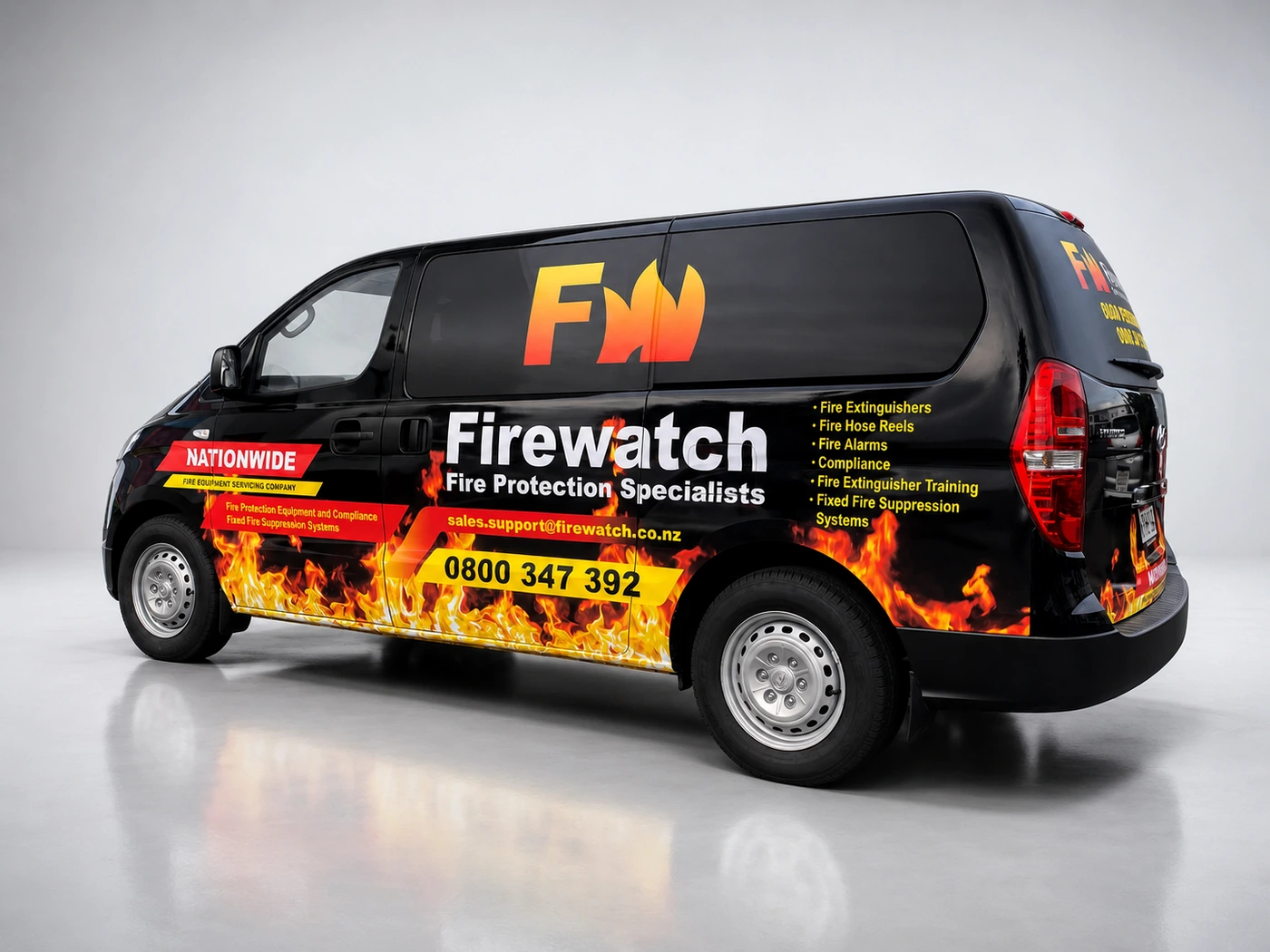
Right First Driving School’s project demonstrates a strong service message supported by contrasting graphic elements and contact details. LUX Electrical shows a coordinated professional identity across work vehicles. These examples illustrate design decisions; they do not establish that every visible element is the same production method or material as your proposed lettering job.
The condition of the vehicle is part of the brief. Tell us about existing vinyl, recent repainting, repairs, corrosion or damaged areas. Close photographs are useful, but suitability may still require inspection. Preparation and any removal work should be included or clearly excluded in the quotation, rather than left as an assumption.
If you are only changing a number or service line, show the entire existing layout as well as the detail. A small update may need consideration of colour matching, spacing and the condition of the surrounding graphics. It should not be assumed that an isolated new element will blend invisibly with older material.
A useful quote identifies the vehicle, included surfaces, artwork work and installation arrangements. For lettering and logos, confirm the intended size and position rather than comparing prices based only on a broad product name. Where a print-and-cut element or another graphic method is proposed, ask how it fits the agreed design.
Let us know when the vehicle can be available and whether it needs to remain operational during the wider project. Production and installation timing is confirmed after the brief and approvals are understood. If several vehicles are involved, discuss the sequence early so artwork consistency and practical availability can be considered together.
Save the approved artwork and the final wording in one place. When the business adds a vehicle or changes its contact details, those records provide a reliable starting point. A photograph can help show the result, but it is not a substitute for the source files and dimensions. Avoid stretching an old logo simply to fit a new panel.
Follow the care guidance supplied with the installed graphics. If an edge lifts or a panel is damaged, contact the installer with clear photographs before attempting a repair. The right response depends on the actual condition and materials, not a general promise attached to every vehicle graphic.
Include the vehicle details, side and rear photographs, logo files and approved wording. Explain whether you want a subtle identity, a large service message or a layout coordinated with existing fleet vehicles. Add any target date and removal requirements. SignSpot can then discuss the design and installation scope without asking you to decide every production detail yourself.